A Graduation At Home

Sofia’s graduation ceremony happened last night on our TV. The basement carpet received my sister’s pink tablecloth as if it were a concert lawn. Big bowls of guacamole that Virginia had just made were set on it, plus a platter of fried pumpkin flowers her little brothers and sister had picked from the garden that morning. With her laptop logged into Microsoft Teams, Sofia broadcast the ceremony in her just-ironed white gown, with its tape-on collar and pine green sash, WWHS printed down the front in gold lettering.

The opening procession was like turning the pages of a scrapbook, every slide bearing 9 photos of 9 different kids standing in 9 different places, each posing with the “Wilson Grad 2020” yard signs that a band of mothers had sunk into the ground at each graduating senior’s house or apartment building. In the background was the tinny sound of the high school band, orchestra, and choir singing “Fantasy” by Earth Wind & Fire, a concert from another era, a time when people could sing next to each other and parents could sit in the audience.

I look at Sofia’s face under her satin cap, her features still those of a child. The baby photo that we placed in the yearbook shows her bald head and monkey face, curiosity drawing out the only wrinkle in her brow, and her body launching from her grandfather’s arms in front of the Italian country church. How much love we felt for this baby, this wondrous act of nature — the only one of her that will ever exist in all of time.

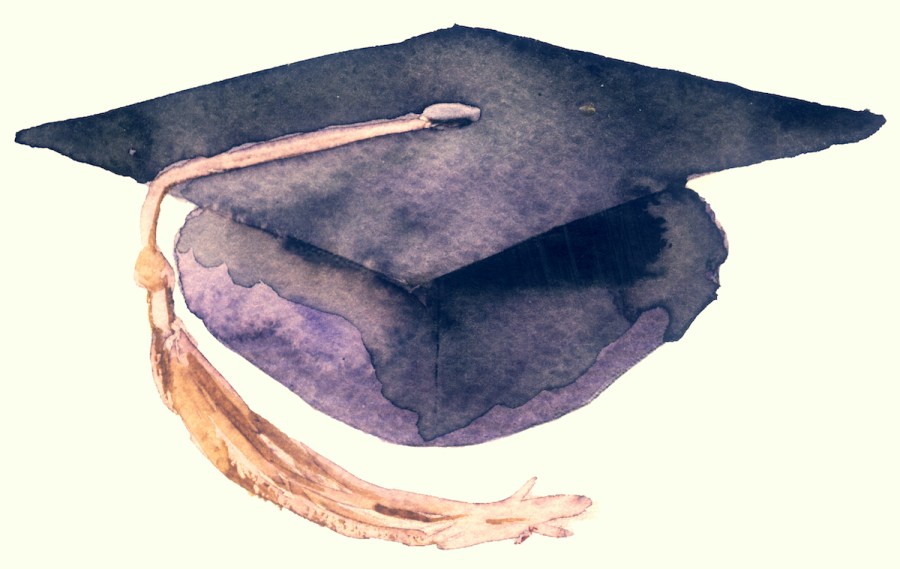
She is sitting with us now, instead of with her friends, surrounded by her siblings who are dressed in tie-dye t-shirts, Under Armour shorts, and bikini tops, while she is draped in white satin, a mortarboard hat on her head, green tassel hanging down, like a master of ceremony, an angel, a sage from another realm. 

“I know this was not the graduation or senior year you expected,” the mayor says in a pre-recorded greeting in front of a hedge on a sunny day, “but don’t let that take away from how proud you should feel in this moment.”

“Our nation is hungry for change,” she says. “The pandemic set the stage for creating a new normal, and as cities across the country begin to open up, including our own, people don’t want to go back to how things used to be.”

I had bled so much for all that was lost, without knowing that only three months later I would no longer grasp for the way things were. Going back would be like returning to the school where you learned how to read and where you played kiss and catch. Seeing how tiny the chairs and desks are, how spare the playground that you once thought was a wonderland.

It took 45 minutes to announce all of the graduates. Senior portraits rise up and dissolve away. Hundreds of names, hundreds of faces, each one so different, each expression, hairstyle, every shape and color of every face. I wish somehow that I had met them all. I only knew a handful. Now it’s too late.

When Sofia appears, it was like the screen radiated with a thousand watts and the image of her face came toward me, glowing and hovering there, and then it was gone. A new face appears, a new name is pronounced, another college is listed underneath in italics, and the violins keeping playing “Pomp and Circumstance” over and over, as name after name, and face after face is honored.

Soon it will be over. Even though we made two dozen cupcakes with buttercream icing and gold and black sprinkles, even though we lit handfuls of sparkly candles, even though there were homemade gifts and cards and a call from the grandparents, the silence will come. I will get the kids tucked in bed, and my husband will finish all the dishes, and her sister will turn on the TV, and Sofia will be alone on the couch again. I don’t want the silence to swallow her up.

It’s the endings before any beginnings that are the hardest to bear.
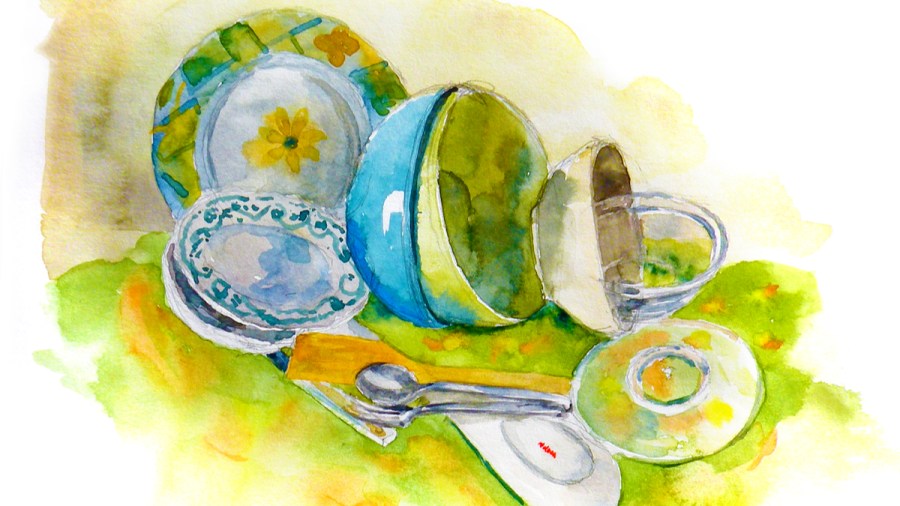
Pandemic Chore Schedule

The main thing that has changed is who makes lunch and who does the lunch dishes. Making school lunches used to be the weekly rotating job of Mark (12 years), Luke (9 years), and Diana (6 years). Based on ingredients I would leave out, every morning before school one of them would fill 5 plastic bento boxes, each with a lid of a different color. (Although in recent times, Virginia, 16 years, got tired of the salami sandwiches and brie with crackers and said she’d pack her own salads and smoothies.)

Now that all the kids are home during the week, the former lunch person sets the table and pours drinks at lunchtime, and the kids take turns making the meal for everyone except for Virginia, who is now vegan and usually makes her own lunch. (My husband, Enrico, works more than ever and is out of the house from early morning until late at night in his job as a hospital administrator and physician.)

When it’s Mark’s week to set the lunch table, it’s Luke’s week to clean the litterboxes (on Monday, Wednesday, and Friday), and Diana’s turn to empty the dishwasher in the morning. Then the jobs rotate, although Luke sometimes tries to get Diana to trade dishwasher for litterboxes, which only has to be done 3 times a week instead of 5.

Another new routine, suggested by the teens when schools closed and adopted at a family meeting, was that each person would do their own lunch dishes, and the person who prepared the lunch would clean the pots and pans and countertops.

Sofia (18 years) makes lunch on Monday, Luke makes lunch on Tuesday, Diana on Wednesday, Virginia on Thursday, and Mark on Friday. 

The teens used to get the younger 3 kids ready for bed at night, until they traded that job for making an extra dinner per week, so I make dinner on Monday, Virginia on Tuesday, Sofia on Wednesday, me on Thursday, and on Friday, we order out from a neighborhood restaurant, one of our new pandemic traditions

Sofia sets the table for dinner on Monday, Wednesday, and Friday, and vacuums the kitchen after dinner on Tuesday, Thursday, and Saturday, and Virginia sets the dinner table on Tuesday, Thursday, and Saturday, and vacuums after dinner on Monday, Wednesday, and Friday.

On the weekends Mark and Luke set the table and vacuum the kitchen after meals. Mark sets the table on Sunday lunch and vacuums after Saturday lunch and Sunday dinner, and Luke sets on Saturday lunch and Sunday dinner and vacuums after Sunday lunch.

The boys also take out the trash and recycling and bring the dirty laundry down to the basement, alternating week by week. I do the laundry on the weekends, and each person bring their clothes up and puts them away.

We usually have 2 dishwashers to load and unload every day, so the afternoon shift is done by Mark and Diana on Monday and Thursday, and by Luke and Diana on Tuesday and Wednesday, and only Diana on Friday.

Dinner dishes are washed by Virginia on Monday, Sofia on Tuesday, Mark on Wednesday, Luke on Thursday, and Diana on Friday (although Enrico or I usually do them for her because she still needs a stool to reach the faucets).

On the weekends, Enrico finishes meals first so he usually jumps up and does the dishes (minus the pots and butcher knives, which I usually do) and he also unloads the 4 to 5 dishwashers per weekend (except for the weird stuff — mixing bowls, whisks, carrot peelers, and baking sheets, which I do).

I make lunch on Saturday and Sunday and Sofia makes dinner on Saturday night and Virginia on Sunday night.

On Sunday, the weekly turns end and new shifts start on Monday. Monday also begins a new bathroom schedule — Mark, Luke, and Diana are assigned different bathrooms each week to get ready for bed because all that used to happen in the kids’ bathroom was playing and fighting. I usually stay with the person in the basement bathroom because no one wants that one, except for Diana who likes that bathtub better.

Diana takes a bath every Tuesday, Thursday, and Saturday, and Luke every Monday, Wednesday, and Friday, and they both take one on Sunday, except when they’ve convinced me they don’t have to, or I’m too tired to make them. 

We only have 1 TV which was not a problem before the lockdown (except on weekends when Sofia and Virginia sometimes wanted to see different movies), and no one was allowed to watch on school nights anyway, unless they watched in Italian. But without friends, play practices, meetings, swim lessons, and babysitting jobs, the rules relaxed and it became clear that we needed a pandemic schedule for the TV too. It was decided that Virginia gets the TV on Monday, Wednesday, and Friday night, and Sofia gets it on Tuesday, Thursday, and Saturday night, and they alternate Sundays.

For other occasional and semi-regular jobs, like taking out the compost, cleaning baseboard moulding, and weeding the garden, we rely on our point system, where unwanted behavior (such as potty play, teasing, and bedtime-flouting) results in points which can be cancelled by doing one job per 3 points. 

I know I’ll want to remember this one day.

Friday Night Pandemic Diary

Restaurant sign only open for take out and delivery during coronavirus

It’s become a lockdown tradition to order out on Friday night from a neighborhood restaurant. We’ve tried Mexican, Korean, French, Italian-American, Middle Eastern, Peruvian, and tonight, Indian. I wonder which of them will still be here when we emerge.

At Masala Arts, you can order the Community Package of 4 main courses, 4 breads, and 2 appetizers, and they’ll give you a free tray of 30 eggs and 4 toilet rolls. We already scored a 12-pack of Charmin mega rolls at CVS on Monday, so we go a la carte.

I tuck 2 hand-made masks into my back pocket, a credit card, and two $5 bills for homeless people we might run into on the avenue. Diana gets out her brother’s hand-me-down bike, and we head out into the goldenrod evening. 

At the top of the hill near SuperCuts, we pass a group of older teens with masks hanging off their faces. Restaurants and dry cleaners say they’re open, but Tenleytown feels empty, like it’s made of scaffolding.

When we pull open the door to the restaurant, Diana says, “There’s no one here!” Instead of a take-out and delivery operation, the place looks exactly the same as it did before the pandemic. Just the bodies are missing, as if they had been vaporized.

A man with a mask is on the phone taking another order, so we walk around, noticing the spice orange walls, the sensuous Indian sculptures, the charcoal drawings of women with real gold jewelry attached. I wish I wore jewels on my forehead and garlands of gold around my waist and ankles.

As I take our warm paper bag of food home in my arms, a bald man I’ve never seen before is resting his forehead on the Mexican restaurant patio post as if it were a walking cane. I drop $5 in his empty 20-ounce Pepsi cup, and he says, “God bless you.”

In the CVS parking lot, Duane has returned to his station on a blanket-padded milk crate, writing the next installment of The Black Fields Chronicles: THE HOBO on his cell phone. He always says “I’m blessed” when I ask how he is. I give him the second bill to help pay for dinner, we say good-bye, and Diana coasts down the hill toward home.

After we eat all the lamb korma, coconut curry chicken, and rock salt cilantro naans, Mark draws dolphins on Virginia’s feet and faces on her toes with a ballpoint pen because it feels good. Sofia starts melting chocolate chips over a pot of boiling water, and it’s time for people to get ready for bed. Virginia vacuums the rice off the floor in a knit strapless dress because it’s her turn.

When I tuck Diana in, she says, “I’m grateful that restaurants are open.” I stay in her room and write about this day while she falls asleep, because she doesn’t like sleeping alone, and because it was a beautiful, sad, special, ordinary day.

The Light Side of the Dark

Our wounds from the trauma of the pandemic have begun to flatten into a kind of scar. My grief is softening, and the boys, 12 and 9, are less like drafted rebels and more like dusty soldiers, marching through blue window after blue window to the end of each day, to the end of the school year, as if walking home after a war that no one has won.

At 11:30 each day, we always get outside, whether the kids’ work is done or not. “Let’s play soccer on Fort Reno!” Diana, 6, says, and the boys agree. Soccer is in, bikes are out.

“You guys go ahead and I’ll meet you there with lunch,” I tell them. I pack a Sullivan’s Toy Store tote with 1 poppy seed bagel sandwich, 2 sesames, and 1 bialy wrapped in foil, plus a half clamshell of strawberries, ice water in 2 old sippy cups, 4 paper towels, and just for fun, 3 Kinder Sorpresa eggs sent by their grandfather in Italy. 

When I leave for the park just a block away, Virginia, 16, is sitting on the floor of the deck eating her vegan pasta bowl, and in the basement a CorePower Yoga on-demand teacher demands heart strength and deep breaths from students who once sweated with her in a white-washed loft, and the ones like Sofia, 18, that she will never know.

I climb the hill and see the kids on the far soccer field. After days of cold and clouds, the sun bathes the hill and our tiny figures in a dome of golden light. 

As I get closer I can see Diana kicking the ball toward the goal, and Mark missing it and falling down like a clumsy marionette. 

They spot me and the boys run to me as they did when they’d see me waiting for them after school. ‘All gas, no breaks,’ as the graffiti on the retaining wall says.

“We were playing world cup soccer,” they tell me. “And sometimes one of us is an A.I. player.”

We select a picnic spot near the community garden. I am drawn to the unusual things in this ocean of grass — the orange-red poppies, bright as my grandmother’s cakey lipstick, and clumps of white irises, standing around like lieutenants.

On the courts beyond the garden, a pair lob a tennis ball back and forth. A guy hits a baseball — TING! — in the batting cage. A woman smiles at us as she walks by with a small dog on a leash.

“Yummm,” I say, and a small chorus echoes me, as we bite into bagels spread with salty buttery cream cheese. A pair of fat carpenter bees bump into each other, dive into the grass, and then fly away in a drunken helix dance. 

“Why do they fight?” Diana asks.

“Who knows what they are doing?” I say. “Maybe they are playing,” or maybe they are mating, which I don’t say because I’d rather not talk about sex.

After lunch, Mark sits on the soccer ball, the stitching busted at one of its joints. “Luke pumped it up too much,” he says.

We pack up the bag and walk home for siesta, just the 4 of us, and I feel we are like the buttercups we walk through, insignificant and yet a part of everything.

I love this peace. Not that long ago, I fought against the breakdown, the shuttering, the quarantine as if it were a militia I had to beat back so I could live. Maybe I never understood what is an enemy and what is a friend, or that maybe something can be both and neither.

Colossus

I help my son Mark with his homework
in English Language Arts

For months he’s been reading
a novel in verse about a girl 
who flees Vietnam
to America

We are asked
if she felt welcome

I know the answer and
feel so ashamed 

“Give me your tired,
your poor, 
your huddled masses”

We did not live up 
to our promise

I cry inside but I stop it below my throat 
because I can’t explain to Mark why


I want to believe there is something 
or someone
that will always embrace me
take away my sorrows
my brokenness

This is too much to ask of a country 
with its government of men
institutions 
codes and tribunals

The meek shall inherit the earth
they say in the Bible

I used to think this meant 
the meek will conquer the strong

But now I know it means
I cannot be embraced
when I am brazen

It’s when I’m huddled and poor 
that I am fingertips away
from the immensity

Down to the River

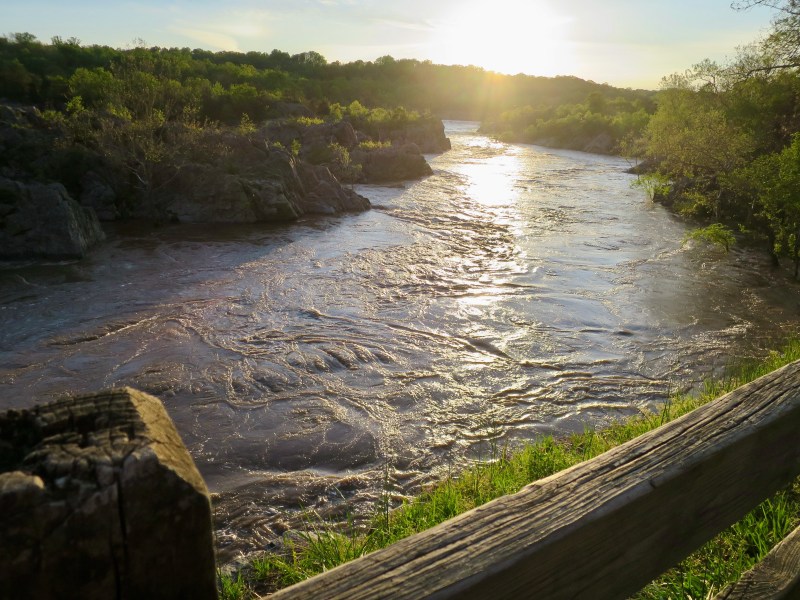
I went down to the river today. It felt like touching the feet of God.  

I hadn’t driven a car in a month. Weeds were growing around the tires. My phone was dead so I drove there without a GPS. I felt grappled to the earth. I got lost.

Cars were parked all over the shoulder by the trail heads like beetles to nectar.

Sometimes you can be too safe. Like a plant in a pot, your roots go round and round and nowhere. The walks we take around our neighborhood. Nature is not tame like this. Landscaped bushes, tulip beds, Dogwoods placed like armchairs in the corners of yards.

In the woods, trees are dangerously high. Others lie dying at their feet. Black Vultures circle high at the edges.

Table manners, Office 365, social media headshots, calorie counts, rankings: what does all this matter?  

Violent beautiful nature. I feel calmed, sobered.

I came back to the river at sunset with my family. I want to give them more than errands for shampoo and canola oil, or bike rides to parks where security guards shoo us away.

We take foot bridges over the punching water of the Potomac. It rips over black bedrock. Diana is scared. She knows the river can kill you. 

I want to know that it is possible to die. This fear stops me from tinkering with dials and buttons, and makes me look up at the sky, and feel the clay under my feet.

Quarantine Goals

After riding her bike on the sidewalk in front of our house, Diana, 6, stops at our weeping cherry tree, grabs some of its small bitter fruits, and says, “Now I’m going to do my spitting-far practice.”

Trees Falling

When the virus arrived in D.C. 
events were canceled one by one:
senior parent meeting
dinner with friends
school auction
I cut them out of my Apple calendar
as if with a machete in a dark wood
clearing a way out

Then events came along 
that needed no cancellation email:
college tour
spring break trip
grandparents’ farm
We cut them down anyway
because this was our work

Now when I open a new week and see:
swim lesson
orthodontist
Blue and Gold Banquet
I just hit delete and these things
disappear 
without a sound
like trees falling in a forest 
when no one is there to hear

Teen Shopper

We used to get our groceries delivered 
but now slots are sold out for weeks
and only 1/2 of what we order is in stock

So Virginia, 16, goes shopping
at the family-owned grocer on Wisconsin
But she’ll only take one tiny black tote
to carry the fruit, butter, and yogurt
(anything larger would be embarrassing)

With no school, plays, Starbucks dates, or babysitting jobs
I’m grateful for the half-full truck
and the small tote
Now she has a reason
to walk in the sun and the rain 
over the wind-flown flowers

The Blessing of Sickness

Almost every day since the coronavirus outbreak, I have felt sick in some way. My throat has been itchy and warm, or the inside of my nose fiery and blue. Sometimes my brain pulsates, my sinuses explode with a fluorescent sneeze, or my stomach twists like a rag being wrung.

When I was sick last December, I would wake up from a nap and feel my lungs aching. Normally my organs work without my thinking about them, freeing my mind to wander here and there, dream of this, worry about that. My body was telling me, “Pay attention to me. Remember me.” 

We think of sickness as a sub-optimal state, but when we are attending to our bodies, we are no longer taking long strange journeys with our minds. When we are quiet in bed, all the pretenses fall away, leaving something simple and precious.

When world leaders and movie stars and princes get infected by this virus, I feel a tenderness toward humanity. These once intimidating highflyers suddenly seem like people who could be in my backyard for a grill-out, chatting with me about the kids and this crazy world and what happens when you die.

When we are healthy, the subtle sensations in the body mostly go unnoticed. The relative stillness and self-sufficiency of the body seem to tell us to go – do – strive.

Sickness can be an opening to the soul. When I am ill, I am no longer the person I want people to see, but the person I was before I knew my name. Being sick temporarily breaks down the constructions that separate me from everyone and everything. 

Maybe that’s why it feels like coming home.