On Dropping Our First Child Off at College

Part I

I had never been to the college our daughter had chosen. Sofia had visited Kenyon with my parents, and I knew that my grandfather and uncle had gone there, but my April visit was canceled due to the outbreak. So when it was time to go on August 26, I wasn’t sure where she was leading me.

The route we normally take to Ohio got us only halfway, then we had to turn north toward Uniontown. We climbed the jagged mountains of Pennsylvania past historic battlefields, pre-colonial stone houses, and painted images of young George Washington in his ruffles and blue velvet, and I felt the same rush of awe and drama that I did when I went to college in New England. The East, with its founding history, plaques and pedigree, felt majestic and weighty. I instead felt like any girl from the cornfields of flyover country.

Kenyon told kids to pack light in case they had to move to a quarantine dorm, so the car was only half-full: a full-length mirror, a fan and a lamp, an area rug and a duffle bag of clothes, plus some photos to decorate the double Sofia would occupy by herself on a campus populated with only freshmen and sophomores.

When I went away to college, the kids I met who grew up in cities along the coast were worldly and impressive. It was easy for me to go from a silent admiration of Manhattan, Boston, Exeter or Choate to a full summation of the associated person as intelligent, powerful, even heroic.

As Sofia and I drove over the National Turnpike, American flags flapped around historic inns and famous taverns and I pictured revolutionaries in ragtag uniforms 300 years ago mapping attacks against the British. On this day, much of the red, white, and blue was supplied by yard signs and flags emblazoned with “Trump-Pence 2020.”

The problem with sanctifying people is that everything else becomes profane. My idols shone so brightly there was no choice for me but to be dull. Destined to chase after them, waiting for benediction.

After Sofia and I crossed the Ohio River into my home state, I felt the let-down of the Shoe Carnival strip mall where we stopped to get coffee. The freeway we took, bland and monument-less, was wet from a storm, but I couldn’t help notice how the water streaming over the concrete shimmered like platinum in the late afternoon sun.

An hour later we would slow down at a college campus of Gothic Revival sandstone that tapered into a row of clapboard markets, Victorian houses converted into academic departments, and a post office with a weathervane cupola.

But before that — when we first bumped onto a 2-lane country road and I knew we were getting close — I rolled down the windows. The air smelled like watermelon and hay, wet fields and crickets. The road tossed us up then held us tight, like a swing at the elementary school playground. We drove past velvety blue soybean fields and tin roof silos, barns taken back into the earth by vines and houses with their paint all rained off, piles of wild honeysuckle and fences fashioned of hay rolls.

Here was the Ohio countryside I couldn’t wait to leave when I was 18. It was so beautiful, in the quiet way that home is. Something I wouldn’t have recognized back then, even if it were right in the mirror in front of me.

Part II

On a day that started with covid self-testing in an athletic center but had no departure deadline, I didn’t know how long to stay. Sofia didn’t seem to need me to leave — except for when I walked too slow or the time I said “micr-o-wave.” There were so many things to do: hang up mirrors and smooth on sheets, unwrap new duvets and take ‘before’ and ‘after’ pictures. I wanted to buy her everything that was missing — a phone charger, a box of tissues, the books she hadn’t ordered yet — as if currency would cease to exist when I left. 

Then her Reebok’s came unglued, the only warm shoes she had brought, and there was still time after eating General Tso’s tofu from the dining hall on a secluded spot on the lawn to drive out to Lowe’s for contact cement (and another fan for her room). 

When that too was assembled, and I could see that the new lightbulbs made her room a little cozier in the darkening evening, I said, “Well, I guess I’ll get going now.” 

She gave me a long, long hug, and said, “Thank you so much for helping me get everything all set up.” She insisted on walking me to the car and, in that moment I became unsure of who was leaving who.

As I drove away toward the hotel, shirred clouds of peach and rose and amber glowed against a sea blue sky. It felt like traveling inside a conch shell. Was launching an 18-year-old like spiraling deeper into life or opening outward?

I thought about how delicate she seemed: her slight frame, her porcelain skin, her detailed and careful ways. I wanted to cradle her and deliver her to the next person who would take care of her. But as she had watched me drive away, she was calm, contained. She didn’t look like she was searching for idols.

It was a quiet freedom that she was getting, a sober one. Not the wild one of my college days when I expected a pinnacle, lashing out against life if it didn’t deliver. It was a freedom that we were aware could be taken away at any point. I had the feeling that she would take every day gently in her hands.

I tried to take pictures of the sunset outside the hotel, but the camera only captured the telephone poles and the taillights of a car driving away. The sun went down and the fountain kept tinkling and pickup trucks kept rumbling around the square as if nothing had happened that night.

Part III

On the drive home, sadness did not come in a flooded rush. It was more like a thread, a thread that had to stretch so far it would always be tight.

Like a spider’s silk, it is only visible in certain lights, when it shines like a sliver blade. You feel it when you’re trying to go somewhere and you get all tangled up. But even if no one else senses it or sees it, I know it is there. It is always there.
The Beginning and End Embedded in Late August

Late August has always felt like an ending and a beginning.

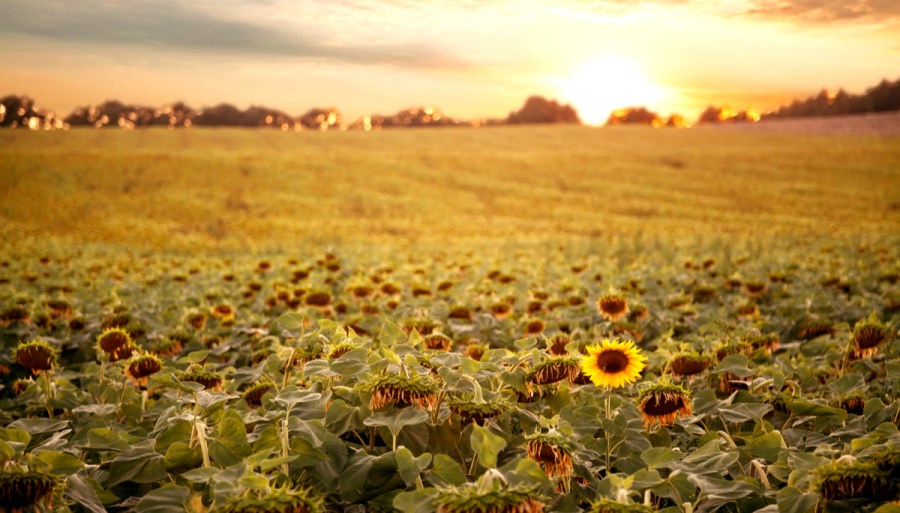
Sunflowers don’t make plates of seeds anymore, cicadas sound more desperate in their güiro song, powdery mildew makes pumpkin leaf parchment, and cooler days discourage cannonball plunges in the pool.

The compensation for turning down summer’s brightness has always been school — fresh-cut notebooks, the waxy smell of never-used crayons, the polish of first-worn leather shoes. New projects, new friendships, new resolutions — the start of school always felt more like a new year than January 1st ever did.


But this year late August feels like a tapering off, a pinching of growth, a withering.

Good public schools have been a uniting force, but now people are moving abroad, switching to micro-schools, hiring tutors, forming learning pods, or simply logging in by themselves at home. It feels like we are particles after a big bang — slowly moving apart before we know what we are coalescing into.

I need a beginning, but I don’t know where it is anymore.


The earth starts turning away from the sun at the height of summer, and by August squirrels are hiding acorns under bushes, and crape myrtle petals fall slantingly like rain. The carefree parties that never were this summer are waning; the vacations that didn’t happen are over.

No longer can I depend on the events and milestones that used to mark the time — the splashy first day of school, the big neighborhood block party, or the exuberant high school musical. I can no longer rely on drop-off for my daily social interaction or eye contact with a teacher to know my kids are doing okay.


aragami12345s/Shutterstock

Just beyond the new beginning, fall has always seemed to say, You’re on your own. Time to get serious and prove yourself. 

This year I will be surrounded by children in our cozy home, but I still sense the familiar foreboding. The race to be good enough. The cool kids. The jostling for attention. The longing for a savior when I can’t do it anymore.

Maybe what is ending this odd August is joining the major stream. And what is beginning is the discovery of the tributaries, quiet and meandering, that I have not been brave enough to follow.

Coronavirus Reckoning – 5 Months In

For me, the coronavirus outbreak was both a horrendous tragedy and a once-in-a-lifetime gift. It was a calamity that threatened everyone on earth and melted away the hierarchies that separate us. We were just human beings for a while. 

In the blackness of quarantine, I became invisible. Free from the constant daily interactions that always seemed to lead me to think I somehow wasn’t doing things right. From the self-consciousness that plagued me: how I was perceived, how I was judged, how I measured up according to the rules of the arena I found myself in.

The quiet darkness hid it all. I was simply a soul. A human being in a family of human beings. 


This is why I am not eager to go back to the way things were.

I don’t want to try to fight my way into society’s detailed ranking, its tight grid.  I don’t want to be aware of how I do or don’t fit in, where I stand in the graph — high or low, left or right.

I don’t want to look at everything I do through the lens of the groupthink to decide whether I am good or bad, worthy or worthless.


“I am a man.” I love this declaration that I see on t-shirts in Black Lives Matters marches. It helps me rewrite the limiting scripts in my mind. When I see a Black person I don’t know, I feel the assumptions my mind is making, and then I say over it, “Man.” Or “Woman.” Or “Child.” 

This is the way I want to be seen. I want to see others this way too. Greeting each person as a human being makes me feel part of a One, not a fragment among many. When I see someone and “human” is all I need to know about them, my heart speaks, not my mind, and compassion flows out.

Every country, every society has a unique hierarchy. People not born with the qualities that are valued at the top will most likely struggle to feel loved and accepted, always feeling they are on the verge of being kicked out.


I love people. I need people. I crave connection and soul-to-soul communion. People cooperate, lift each other up, make each other feel less alone, become the safety net. We help each other survive and thrive.

But there is something about large groups that leads us to categorize and place value on people based on what they do, what they look like, how much they earn, or how assertive, outgoing, or fashionable they are.

Perhaps this is why I am not heartbroken that our world will stay small and that our house will become a school this fall. School — even as a parent who only is involved with fundraisers and drop-offs, field days, plays, and graduations — brings back the same feelings I had as a child: I’m different and I’m afraid of what I have to do to belong.

I feel sad for my children, missing all the happy nurturing things about school and playing with friends in the sunshine. I feel sad for my daughter who will start her senior year on a computer. The suffering inflicted because schools are not opening is devastating. It’s a sign of massive dysfunction, and I feel a sense of dread as I witness the institutions and economies that support the livelihoods of so many people continue to deteriorate.

This is why it is so hard to reckon with the fact that I am okay with keeping the social, busy, public part of my life in the dark for a while longer, and clinging to the peculiar warm light I have found in the wreckage. Because as much as I grieve our losses, there was something unhealthy about the way we were, and something healing about what is now.

Denis Belitsky/Shutterstock

Praise the Interstate Rest Area

To get across Maryland, West Virginia, half of Ohio, and the Allegheny Mountains in 7 hours, all that is needed is to depress a pedal on a machine with flying wheels. You don’t even have to press it that hard to go 70, 80 miles per hour. To walk over that land, it would take more than two weeks, two weeks of hiking and laying your head down in a different place each night.

It took us 1/3 of a day to disappear from a hilltop in southern Ohio where a brunch was shared with grandparents under a locust tree, and reappear at a stucco house in an Eastern seaboard city where yards are arranged in checkerboard squares. 

There was just a skin of light left when pulled into the driveway, enough to see that the zinnias had grown taller than Diana in the week that we were gone.

“What’s this?” Sofia said when she pulled out a scraggly weed at the top of the cooler packed with milk and butter, green peppers and tomatoes from my mother’s garden.


When you’re flying in a spinning machine because you want to get home before dark, you only touch your feet to the ground but once or twice. 

The weed looked like a shooting star firework, its skinny seed pods shooting off the stalk, each with a single white floret at the tip. The type of flower that grows in the shade.

At the rest area off I-79 near Clarksburg, West Virginia, the kids sat around a cement picnic table by the bathrooms sharing M&Ms and an Orange Crush from the vending machines. No one wanted to relocate their snack break to the shade of trees at the top of the hill.

I left my shoes in the grass by the car and walked up to the band of shade. But instead of the grass ending, the trees simply parted, the grass unrolled up the hill, and soon I found myself in a clearing in the middle of a small wood. Some kind soul had swirled a mower up here. This place was meant to be discovered.

I could no longer hear the whining of trucks over the freeway. Instead the steady ring of crickets. Sunlight — bossy and yellow in the outside world — sifted through the trees and came out blue and hazy, filtered with drifting bits.

A mowed path led further into the woods. The ground felt spongy and cool on my bare feet, and I bent down and saw that it was not moss but a blanket of miniature fern fronds. The smell of damp things — creeks, dragonflies, spores. A blue and black butterfly danced up and around the path.


Of the weird things in the cooler, I told Sofia, “Oh, those are my artifacts.” But the shooting star flower, the wild daisy, and the purple thistle I had tucked in there were now twisted and black like things left over after a fire.

Once we got the kids in bed, cat fed, food put away, and some clothes unpacked, I had to lie down. It wasn’t that late and I felt I hadn’t done much of anything, but all the cells in my body were still tumbling and rolling over like those tires, and I needed to stop so that everything could come to rest.

It’s not natural to move a human body so far in a day. It seems so ordinary, so inexpensive, to get from there to here with only a map and a tankful of gas. But at that velocity, a single glance away from the road, a fumble with the air conditioning dial, or a slight bump of the wheel, and we could have all been killed.


“Naturalized Area,” I noticed a sign said after I wandered back down toward the picnic table and parking lot and looked back up at that secret garden.

I guess when you let things be natural, they get magical like that — they smell like dew, they turn sunlight the color of water, they carpet paths with fern moss, they bring striped bees and Monarch butterflies to the rose velvet tassels of Joe-Pye weeds.

Maria T Hoffman/Shutterstock

Thank you God for rest areas. Those modest harbors where you don’t have to buy anything to use the bathroom or wash your hands. Where you can sail off the American interstate highway — birther of chain restaurants and suspected killer of small towns, mother of quick trips home and enabler of packages delivered in a day — and fill up on enough free grass and trees to get you home, and your feet back on the ground.

Stubborn Wishes

“The whole reason that there are so many dandelions is because of the wish thing,” Mark, 12, tells me.  Diana, 6, gets off her bike, lets it thunk to the ground, and bends down to pick two blowballs from a patch of grass — one for me, one for her brother.

“Thank you,” I say, and look with admiration and repulsion at this perfect sphere, this geodesic dome built of fluff, the bane of gardeners everywhere. I blow mine, feeling like a vandal, wishing the seeds will float to the street, not to innocent yards behind me.

When I try to pull one up in my garden, gathering all its arms and legs and yanking it by the neck, its body remains in the earth and soon will grow a new head like some kind of mythological monster.

Mostly I’ve given up, now just popping off the flower heads when they’re young and yellow and leaving the rest, as if accepting a colony of stray cats as long as they don’t make babies.

Whose wish is growing between the bricks by the Lilies of the Valley? Who planted the desire in between the sidewalk and our front gate?

Are the dandelions in our gravel driveway proof that my children had dreams? And I, thinking only of neatness and order, behead them on my way to accomplishing something else. Sometimes I stuff the heads in my pocket, for lack of a place to dispose of them, then find them again, drawn up and clean, in a freshly laundered pair of jeans.

They don’t want to be yanked out of the earth. They do everything they can to stay anchored there, shooting their tap roots down like arrows, saying ‘I belong here!’ They could survive the worst drought, flood, or heat wave, when the basil I coddle in a pampered plot will die if not offered a drink of water on a hot day.

Is it because those untold wishes are more tenacious than anything you can buy or plan? My mom used to drop her wedding ring around a candle on her birthday cake before blowing out the flames to make her wish come true.

Today Diana asked if she could pick our first cherry tomato, the only one this season that has made the journey from yellow star to rosy globe while escaping the catbird’s eye.  

She cradles it in her hand and says, “Let’s do a ‘sermony’ or whatever you call it,” and I know she means the way we take the garden’s first fruit, a single blackberry or strawberry or sugar snap pea, and place it on a sliver plate until dinnertime when everyone is seated, and after presenting the specimen, slice it into as many sections as people around the table, placing the morsel on our tongues, tasting all at once the watering, the weeding, the coaxing, the staking, the shooing, the clearing, the sunlight, the rain, the worms, and the wishing.

“Feel it,” Diana holds out the little ball. It’s plump and firm, round and warm.

“It’s like a wedding ring,” she says and runs inside, climbs onto the hutch and reaches up to get a small white bowl, placing the orange globe in the center by itself, like a ring of gold that seals a pact of love.

Later this morning Luke will celebrate his 10th birthday with one friend, one present, one pizza, and one scoop of salted caramel gelato in a paper cup. No candle, perhaps because of that article in the newspaper that asked whether it was dangerous to blow germs all over a dessert. 

He will be upstairs putting together the Star Wars Black Ace imperial Lego spaceship he just unwrapped when his dad will come home from work, take the ragged mass of keys out of his pocket and his wedding ring off his finger, and drop them, Ching-a-ling!, into the silver tray on the counter, and then pop the single cherry tomato in the little white bowl into his mouth. 

There is no ceremony when we blow off the globe of downy hair from a dandelion puffball until the seedhead is completely bald, plucked and pock-marked like an unfeathered chicken. No ceremony except for the long in-breath and the closing of eyes and the fantasy spinning into color. No ceremony except for the parachute seeds dispersed into the wind, onto the rolling lawns and sidewalk cracks, over the blue spruce hedges and under buckling blacktop driveways. Secret wishes that won’t let go.

Summer Morning Sadness

The first time we went to the pool this summer, we could only stay 20 minutes. Mark had math class on the living room computer, and I thought we’d hop in the car right after and make it for most of our slot, but he had a quiz and said it was going to take him a long time, but we said, of course we’ll wait. 

Luke and Diana and I sat on the porch in our bathing suits with sunscreen on, listening to the crows caw and distant lawnmowers rove, and after a while we opened up the pool bag and looked at the hotdogs all wrapped in foil, and then we unwrapped them one by one and the mustard was so tangy, the buns so soft, and then we opened the box of carrots, and then the container of potato chips, and when Mark came out, he looked white and said there was no point, but we piled in the car and got there just in time.

But this morning Mark doesn’t have math, and we got a 2-hour reservation, and the water is sparkling like turquoise gold. The kids throw off their shorts and pull on their goggles and fast-walk to the deep end, and they’re so happy, and Sofia is coming home today, and everything is fine. So why do I feel like sitting on this vinyl lounge chair and crying?

Was it the email that came in this morning declining the invitation to celebrate Luke’s 10th birthday at an amusement park, or the shame I felt for having even asked? Is it because the thing he really wants is a bike and I can’t find a single 24-inch bike in stock to give him?

Maybe it’s because of all the money we lost on the canceled trip to Florida, or that yesterday the mayor was supposed to announce how schools would re-open but then called off the press conference, and Houston and Atlanta and L.A. and Montgomery County have already announced that school will be online this fall.

Or was it that when Virginia said she didn’t mind if her senior year was all virtual because she’s over high school, I saw a black computer screen replace her life and my redemption, my last chance to be the mom she wanted me to be, to trust her, to let her do more when high school was still high school and kids still loitered around the convenience store and rode buses and bought dresses for dances and roamed around looking for parties after football games.

“When are you going to get in?” the kids ask me, the tips of their noses dripping, their eyelashes like star points, and I tell them, “Later, I’m not hot enough yet,” but what I really mean is I’m not happy enough.

Maybe it’s because today is the day we would have flown back from Italy, bleary from too many nights out and visits to cousins and early morning cappuccinos and our suitcases would be jammed with stained sink-washed clothing and plastic bags of shells, brochures, and tiny bottles of Italian shampoo swiped from hotels.

Is it because my children have each other, but I spend my days alone, and even though I am consuming this solitude like one wide-open mouth, I feel that somewhere people are hugging and laughing and locking eyes and I’m here caught in a wind tunnel of air, so much air, fresh non-human air.

At the diving boards, kids line up to do can-openers and back dives, and I feel like a traitor, dry and motionless on my chair. I don’t know what to do with this sadness. It makes me feel soft, rich, babylike. To mourn the loss of things that others have never held.

But how does it help to not let myself cry? I become a steel drum with a welded top, my precious dangerous stuff kept in. And everyone else kept out.

After the whistle blows the long looping whine that means “get out,” lifeguards block the main entrance and masked bathers file out of the side exit by the chain link fence. I too am wet — the kids convinced me to stop wrestling with my sorrow and jump in. Near the snack bar, an enormous stack of pool chairs has been constructed, hundreds of different types and sizes that once made this a place to gather have been fitted together into one giant mass, as if ready to make a bonfire. 

The remaining few set sparsely around the pool. So I couldn’t sit near anyone and pretend that I was happy. Spaced apart so that the air would fill with silence instead of chatter. So that sadness had a way to spill out and join with the rest and finally be washed away.

Uncoupling

Today I dropped off my 18-year-old daughter Sofia and three friends at a cabin in the woods. They had been planning this trip for months. Which way to divide up the cooking and buy the groceries, how they would get tested twice and quarantine for two weeks before (and some for two weeks after), who could drive and who had a car or a brother with a license, if they would bring bikes or charcoal, jugs of water or a filter, and who would bring the sunscreen, the bug spray, and the fire starter.

They played oldies from 2015 during the drive into the Shenandoah mountains, and bounced in their seats and laughed, the conversation always tripping along with the energy of an adventure beginning.

“I’ve been doing hella driving since I got my learner’s.”

“I had to do a U-turn in front of a sno-cone truck!”

“28 out of 30. I got the one wrong about how to pass a streetcar.”

“I don’t think I’ve ever seen a streetcar.”

When we exited onto a two-lane ribbony country road, it started raining and they checked the weather on their phones, and it came down so hard all the colors washed into white, and we drove through farms clinging to the slopes and under a freight train standing still on a ridge above us, and then we turned onto a one-lane gravel road, then a muddy drive, and when we got to the steepest part, we thought the car wouldn’t make it.

“Dada sad, but a little glad,” my husband had said when he hugged Sofia goodbye before she left the house, and as we backed out, he stood in the street to make sure no one was coming. I had ordered groceries that morning, but when I deleted the frozen fruit Sofia wouldn’t be needing for her morning smoothies, I felt like I was deleting her from my life.

She wouldn’t be coming down in her yoga clothes every morning, hair braided down the back. She wouldn’t be making her weekly dinners with yogurt dill sauces or her roasted summer vegetables. We wouldn’t do driving practice on Tuesday afternoon, and she wouldn’t be there to remind Luke to put his napkin on his lap, or help Mark with his summer math homework, or ask the kids so I don’t have to, “Why aren’t you in quiet time?”

“Is that everything?” I call back to the girls who are now checking out the cabin bedrooms and the valley view from the hot tub deck, as I look into the empty car, and then I remember the firewood in the secret trunk compartment. I set the wood down next to the little wood stove and start trying to figure out how it works, and I realize I have already done too much. 

Sofia gives me a big hug, and she is happier than she has been in a long time, and I walk through the fiberglass door with the beveled glass window and close it, leaving me on the other side, and I get into the car and tell Google Maps to take me home.

She will not be home for dinner tonight, but she will also not be on that living room couch watching YouTube videos — she will be so far from her family that she will feel herself expanding, she will fill a space open and free, not criss-crossed by expectations and demands, underground hopes and invisible canopies. She will feel the chemistry of friendships alchemizing, conversations that go on for 48 hours, figuring out how she likes to do things, how she likes to run a house, set a table, organize her day, follow her heart.

As I wind down the mountain, the sun is coming back out and steam rises off the pavement. I drive past poultry farms and grazing cows and junk yards with piles of tires in front, and the road curves in and up, down and around, like a hammock swinging.

And then through a break in the trees, I see that freight train moving across a high trestle between two peaks, and I start humming that country gospel song I don’t know why I love, “Life’s Railway to Heaven.” The train must have stopped in the downpour, but it’s moving now. Black tank cars, yellow boxcars, well cars stacked with shipping containers, graffiti decorating each one, including the word “HOME” spray painted in all caps.

The road winds around gasps of mist hanging beside the mountains, past the Skyline Caverns with its rainbow waterfall and enchanted dragon, and then there it is again churning along the tracks on a ridge, and I want to stay there and hear the steel rolling over steel, watch the cars clicking by one by one over the rails, being pulled along, simply holding what they were given, because somewhere ahead an engineer has his hand on the throttle, watching the curves, the fills, and tunnels.

When I get home, I send pictures of the girls and the cabin to the other moms and I think that I might not hear from my daughter for five days. And this is practice for a real leaving. A leaving she has been preparing for her whole life. An uncoupling. And I will feel the sudden loss of the weight behind me, like a railcar being unhitched from another after a long journey, and not being able to look back to see where the other is headed.

Today We Would Have Departed

Today is the day we would have sat on our suitcases to zip them up, flattening down carefully selected outfits and collections of mini lotion tubes, and Mark would have offered to carry his sisters’ bags down, until 7 of them congregated in the entry. We would have given the sunflowers and kiwi berries one last soak, crouched to say goodbye to the cat under the couch, and turned the porch light on as we latched the door. We would have eaten grapes and salami sandwiches wrapped in foil in Terminal B as we watched the sun set over Dulles airport, waiting to board the plane, knowing that in one short night and one long day, Nonno Franco would be wearing his shirt full of pockets just beyond customs in Milan holding boxes of peach nectar and brioches, and the cappuccino that I would get at the airport bar would be the best I’d ever had.

After months of zig-zagging between resignation and hope — Italy has recovered! but New York is a mess — Sicily is offering 1/2 off hotel stays! but only to Europeans — the emotional spikes got softer and softer until they finally lay flat. We asked the airline to issue us vouchers for another year, but no one is sure when that will be.

We were going to go to the Marches where Enrico’s father grew up, where it was his job as a child to buy ice for a handful of lira from the man who would chop off a block with an axe, and Franco would wrap it in a cloth and race home in the noonday sun — “Via, via!” — with the melting ice strapped to his handlebars, past the farms where earlier that morning he and his father had traded the sole and seabreams they had caught in their net for peaches and cantaloupe and watermelons still warm from the sun.

I thought it would be sad when the day of departure came around, but it already feels far far away, like a carful of cousins who stayed for a good long week but are now already 7 states and 2 motels away, and their sheets have already been washed and dried and folded away, the extra chairs stacked back in the garage, and we have returned to following our hearts or to-do lists, sleeping in our own beds, spinning new scenarios in the privacy of our own minds.

Before we canceled the reservation on Vrbo.com, we had planned to argue over bedrooms when we arrived at the centuries-old house on a cliff above Ancona where the pictures showed stone stairs leading down to a sandy inlet of the Adriatic Sea, and at lunchtime we’d toss hot pasta with olive oil and garlic and red pepper flakes and wrap salty prosciutto around melon slices and eat it in our bathing suits under the myrtle trees on the patio, and I didn’t mind that the house had no air conditioning because I like it hot, or pipes so old you could only take one shower at a time, because we would have been all together and it would have been new — to me.

Tables would have been set end-to-end in the courtyard of a Milanese trattoria to fit all of Enrico’s aunts and uncles and cousins, and there would have been dinners that rolled on until midnight with his friends from university, and maybe I would have cried from laughing at the story of the forgotten tent poles when they were camping on a beach in Greece. And we would have met the family of Isabella, the exchange student who stayed with us last September, and the girls would have hung around in beachside bars with Italian teens and I would see vistas opening into their lives where there were none before, and my Italian husband would be like a fish released back into the sea, not waking up thinking about the situation on Ward D2 or the back-to-back appointments until 9:00 pm, but he would be shimmering with plans of which rugged beach we would conquer that day, which hill town we would climb, which odd lamb dish only made in this one village he would track down, and he would do all the leading, and I would feel like I was sitting in the back seat and just looking out, not having to drive the car, decide which way to go or what to do.

We will remember this summer not for these things, but for an ordinary quiet so deep it rivals a symphony. Siestas will keep happening every day after lunch, and I will keep taking walks after dinner when the kids are in bed and the fireflies are starting to shine like diamonds sprinkled in the twilight. We will pair up and go down the list of things that needed to be done but never were, like repainting the antique wrought-iron garden chairs, figuring out how to recaulk the bathtub, and translating the fable their Italian grandma remembers hearing when she was little. I will keep taking Sofia out for driving lessons in half-empty state park lots, and Mark will finish a middle school math class on Microsoft Teams, and we will take a long drive across the Appalachians and hug my parents with masks on and the kids will run free and I will write and sleep, and we will notice how many different kinds of bees there are, and how a zinnia bud looks like a cut gem before it opens. 

A Graduation At Home

Sofia’s graduation ceremony happened last night on our TV. The basement carpet received my sister’s pink tablecloth as if it were a concert lawn. Big bowls of guacamole that Virginia had just made were set on it, plus a platter of fried pumpkin flowers her little brothers and sister had picked from the garden that morning. With her laptop logged into Microsoft Teams, Sofia broadcast the ceremony in her just-ironed white gown, with its tape-on collar and pine green sash, WWHS printed down the front in gold lettering.

The opening procession was like turning the pages of a scrapbook, every slide bearing 9 photos of 9 different kids standing in 9 different places, each posing with the “Wilson Grad 2020” yard signs that a band of mothers had sunk into the ground at each graduating senior’s house or apartment building. In the background was the tinny sound of the high school band, orchestra, and choir singing “Fantasy” by Earth Wind & Fire, a concert from another era, a time when people could sing next to each other and parents could sit in the audience.

I look at Sofia’s face under her satin cap, her features still those of a child. The baby photo that we placed in the yearbook shows her bald head and monkey face, curiosity drawing out the only wrinkle in her brow, and her body launching from her grandfather’s arms in front of the Italian country church. How much love we felt for this baby, this wondrous act of nature — the only one of her that will ever exist in all of time.

She is sitting with us now, instead of with her friends, surrounded by her siblings who are dressed in tie-dye t-shirts, Under Armour shorts, and bikini tops, while she is draped in white satin, a mortarboard hat on her head, green tassel hanging down, like a master of ceremony, an angel, a sage from another realm. 

“I know this was not the graduation or senior year you expected,” the mayor says in a pre-recorded greeting in front of a hedge on a sunny day, “but don’t let that take away from how proud you should feel in this moment.”

“Our nation is hungry for change,” she says. “The pandemic set the stage for creating a new normal, and as cities across the country begin to open up, including our own, people don’t want to go back to how things used to be.”

I had bled so much for all that was lost, without knowing that only three months later I would no longer grasp for the way things were. Going back would be like returning to the school where you learned how to read and where you played kiss and catch. Seeing how tiny the chairs and desks are, how spare the playground that you once thought was a wonderland.

It took 45 minutes to announce all of the graduates. Senior portraits rise up and dissolve away. Hundreds of names, hundreds of faces, each one so different, each expression, hairstyle, every shape and color of every face. I wish somehow that I had met them all. I only knew a handful. Now it’s too late.

When Sofia appears, it was like the screen radiated with a thousand watts and the image of her face came toward me, glowing and hovering there, and then it was gone. A new face appears, a new name is pronounced, another college is listed underneath in italics, and the violins keeping playing “Pomp and Circumstance” over and over, as name after name, and face after face is honored.

Soon it will be over. Even though we made two dozen cupcakes with buttercream icing and gold and black sprinkles, even though we lit handfuls of sparkly candles, even though there were homemade gifts and cards and a call from the grandparents, the silence will come. I will get the kids tucked in bed, and my husband will finish all the dishes, and her sister will turn on the TV, and Sofia will be alone on the couch again. I don’t want the silence to swallow her up.

It’s the endings before any beginnings that are the hardest to bear.

Pandemic Chore Schedule

The main thing that has changed is who makes lunch and who does the lunch dishes. Making school lunches used to be the weekly rotating job of Mark (12 years), Luke (9 years), and Diana (6 years). Based on ingredients I would leave out, every morning before school one of them would fill 5 plastic bento boxes, each with a lid of a different color. (Although in recent times, Virginia, 16 years, got tired of the salami sandwiches and brie with crackers and said she’d pack her own salads and smoothies.)

Now that all the kids are home during the week, the former lunch person sets the table and pours drinks at lunchtime, and the kids take turns making the meal for everyone except for Virginia, who is now vegan and usually makes her own lunch. (My husband, Enrico, works more than ever and is out of the house from early morning until late at night in his job as a hospital administrator and physician.)

When it’s Mark’s week to set the lunch table, it’s Luke’s week to clean the litterboxes (on Monday, Wednesday, and Friday), and Diana’s turn to empty the dishwasher in the morning. Then the jobs rotate, although Luke sometimes tries to get Diana to trade dishwasher for litterboxes, which only has to be done 3 times a week instead of 5.

Another new routine, suggested by the teens when schools closed and adopted at a family meeting, was that each person would do their own lunch dishes, and the person who prepared the lunch would clean the pots and pans and countertops.

Sofia (18 years) makes lunch on Monday, Luke makes lunch on Tuesday, Diana on Wednesday, Virginia on Thursday, and Mark on Friday. 

The teens used to get the younger 3 kids ready for bed at night, until they traded that job for making an extra dinner per week, so I make dinner on Monday, Virginia on Tuesday, Sofia on Wednesday, me on Thursday, and on Friday, we order out from a neighborhood restaurant, one of our new pandemic traditions

Sofia sets the table for dinner on Monday, Wednesday, and Friday, and vacuums the kitchen after dinner on Tuesday, Thursday, and Saturday, and Virginia sets the dinner table on Tuesday, Thursday, and Saturday, and vacuums after dinner on Monday, Wednesday, and Friday.

On the weekends Mark and Luke set the table and vacuum the kitchen after meals. Mark sets the table on Sunday lunch and vacuums after Saturday lunch and Sunday dinner, and Luke sets on Saturday lunch and Sunday dinner and vacuums after Sunday lunch.

The boys also take out the trash and recycling and bring the dirty laundry down to the basement, alternating week by week. I do the laundry on the weekends, and each person bring their clothes up and puts them away.

We usually have 2 dishwashers to load and unload every day, so the afternoon shift is done by Mark and Diana on Monday and Thursday, and by Luke and Diana on Tuesday and Wednesday, and only Diana on Friday.

Dinner dishes are washed by Virginia on Monday, Sofia on Tuesday, Mark on Wednesday, Luke on Thursday, and Diana on Friday (although Enrico or I usually do them for her because she still needs a stool to reach the faucets).

On the weekends, Enrico finishes meals first so he usually jumps up and does the dishes (minus the pots and butcher knives, which I usually do) and he also unloads the 4 to 5 dishwashers per weekend (except for the weird stuff — mixing bowls, whisks, carrot peelers, and baking sheets, which I do).

I make lunch on Saturday and Sunday and Sofia makes dinner on Saturday night and Virginia on Sunday night.

On Sunday, the weekly turns end and new shifts start on Monday. Monday also begins a new bathroom schedule — Mark, Luke, and Diana are assigned different bathrooms each week to get ready for bed because all that used to happen in the kids’ bathroom was playing and fighting. I usually stay with the person in the basement bathroom because no one wants that one, except for Diana who likes that bathtub better.

Diana takes a bath every Tuesday, Thursday, and Saturday, and Luke every Monday, Wednesday, and Friday, and they both take one on Sunday, except when they’ve convinced me they don’t have to, or I’m too tired to make them. 

We only have 1 TV which was not a problem before the lockdown (except on weekends when Sofia and Virginia sometimes wanted to see different movies), and no one was allowed to watch on school nights anyway, unless they watched in Italian. But without friends, play practices, meetings, swim lessons, and babysitting jobs, the rules relaxed and it became clear that we needed a pandemic schedule for the TV too. It was decided that Virginia gets the TV on Monday, Wednesday, and Friday night, and Sofia gets it on Tuesday, Thursday, and Saturday night, and they alternate Sundays.

For other occasional and semi-regular jobs, like taking out the compost, cleaning baseboard moulding, and weeding the garden, we rely on our point system, where unwanted behavior (such as potty play, teasing, and bedtime-flouting) results in points which can be cancelled by doing one job per 3 points. 

I know I’ll want to remember this one day.