My 12-year-old son examines
the calluses on his hands
and says,
“My fingers are
taking a beating.
From typing,
doing biking,
and pillow fights.”
The Kiss Will Stay
When I tuck in my six-year-old daughter tonight, she says she’s grateful for ice cream. Then she takes my palm and, with her eyes closed tight, kisses it and says, “Even if you wash this hand, the kiss will stay.”
I had been feeling sad that afternoon. And mad at myself for feeling sad. I should be over this. I should be getting better.
I took a walk by myself through the cold damp, taking the alleys, the secret ways of the neighborhood: broken gates swinging open, moss growing on tree roots, window sills rotting.
Fellow walkers stayed so far away, out of kindness or fear, that our eyes couldn’t meet.
Yesterday my 16-year-old daughter Virginia painted her room frosty pink over the Dalila yellow she had chosen when she was 10, and placed purses and sexy clothes on the shelves which used to hold Keira Cass novels and encyclopedias of Greek mythology.
I find the turquoise leather Holy Bible that my aunt gave her and its onion-skin pages remind me of my grandmother, who would underline passages with a ballpoint pen and a ruler, passages that I didn’t understand but that seemed mysterious and important.
I find the poem “A Time for Everything” in Ecclesiastes on page 841. It says that everything is supposed to be this way: there is a time to mourn and a time to dance, a time to tear down and a time to build, a time to search and a time to give up, a time to be born and a time to die.
In my bedroom after my walk, I can hear Virginia chopping broccoli downstairs, playing Whitesnake songs I listened to when I was young and new Dope Boy ones I don’t understand. My children are becoming adults. I am getting older too.
I thought this life was going to be safe. I have not been a refugee, a revolutionary, a migrant. A minority, a wounded soldier, or a widow. I have been spared the trials of being hungry, poor, or homeless. It has been a stable existence, rocked only by dramas of my own creation.
But all our scientific advances and smart phones and futures trading were not enough to save us from this plague.
When I tuck my 9-year-old son Luke into bed, I sing him “Amazing Grace,” as I have done since he was an infant with a silky-border blanket. I touch his slight, smooth arms and know they will be bigger than mine one day. He doesn’t think his lullaby is as special as the one I sing to his sister, “You are My Sunshine.” What is a wretch, he asks, and how can you see if you were blind?
But this song gets to the heart, the opposites bundled up inextricably into this one big life. Yet I keep insisting on strength without getting hurt, rest without feeling exhausted, understanding without confusion, courage without fear. Where tyranny was missing, I have created my own oppression of easy smiles, bouncy optimism, and relentless self-improvement.
I lie in my bed after the children are asleep, the older ones quiet on their screens. The cat who disrupts my slumber too early every morning rests his purring face into the curve of my hand.
The kiss is what stays. I feel it as she sleeps and I am still. It’s something strong yet untouchable, like love. I want to hang onto the sunshine, push away the storms. But there’s something that infuses and encircles it all. And the only way to hold onto it is to somehow let go.
Trading Potty Words for Silver
The word diarrhea has been said about 13 times so far today and no one is sick. With kids home from school and all their time spent together, the number of points they collect for saying gross things, making potty sounds, and being mean to each other is surging. Our house has become a potty-word-slinging, insult-hurling hot spot.
When we moved to New York City 10 years ago, we were so proud that we could take our daughters Sofia and Virginia, who were 5 and 7 at the time, to places like the Metropolitan Museum of Art, institutions that would surely instill a worldly sophistication. We soon realized that the Met, and especially the Greek and Roman statue room, would not be a regular cultural destination due to its extensive collection of butts and penises.
This week alone Luke has earned points equal to 12 jobs, Mark 4, and Diana 3, and I’m running out of chores to give them and the will to enforce it all. I feel like a shipwrecked captain on a deserted island, slowly losing control over her crew.
It’s Saturday morning, and when the usual pillow-fighting, furniture-rocking, and ear-splitting screaming starts after breakfast, I am unable to get the kids outside, so I tell them they have to start doing jobs, like emptying these two dishwashers for example. Then Luke, 9, says, “No, I’m going to polish silver!”
We have a collection of silver-plated serving dishes from my grandmother and thrift shops, which are not valuable but I like to display their old-world beauty on our hutch and occasionally use them to serve fruit salad or dinner rolls. My mom would be happier if we would polish them, but I think their bronzy patina of neglect has an air of faded elegance, and who has the time anyway?
Luke gets the stool and reaches up to get one of the tawny bowls, and I start spreading the table with newspaper. “I want to polish silver too!” Diana, 6, says, climbing up on the hutch and trying to grab another serving dish.
Earlier this week we had taken an outing to the hardware store, one of the only stores open now, to get more polish and Luke suggested we get two tubs. “I’m going to be doing a lot of polishing,” he said, recognizing perhaps his penchant for potty words and his attraction to this method of penitence.
Mark, 12, says, “That’s not fair that he gets to do all the fun jobs!” and soon three polishers are at the table rubbing silver platters with pinky-gray cream, running over to the sink to rinse them off, and calling, “Whoa, Mama, look!”
We look into these once brown and cloudy platters and see a surface so bright and clear it’s like a mirror miraculously appearing out of a murky pond in the dark woods.
Virginia, 16, who is sitting on the couch going over the list of supplies she’ll need to paint her walls Middleton Pink, comments, “That’s the way they really look?”
After lunch Luke has to do half of Mark’s vacuuming job because he was playing with Legos in his pajamas when it was his turn to set the table. Enrico has started to help Diana with her Italian homework, and as Luke pushes the sweeper wand back and forth over the tiles, he sings diarrea in Italian over and over to the tune of “Oh My Darling, Clementine.”
I let the song wash over me and don’t even consider doing anything except going upstairs for a nap, when I hear the sound of reinforcements arriving. Sofia, 18, that former Metropolitan butt connoisseur, gets up from the living room couch and walks toward the chart with a pen like a dart, yelling, “Luke, do you want to be shining silver your whole life?”
She adds another tally mark next to his name, and I think, maybe I won’t be carried off by a band of savages. Or maybe I will, but we’ll dine together on the finest silver.
A Prayer

The world is quiet, like a winter day when giant snowflakes fall one by one until everything is thick and round, telling us to stay home, go back to bed, play.
Every weekend now is a family weekend, every meal is a table set for seven, every night children are all safe in their beds.
Now is a time when it feels natural to write a letter by hand, to call a friend and talk long, to make rolls from flour and salt when the shelves are bare.
But how can I love this life when it’s covered with the blood of sacrifice? How can I know this joy when it is lifted from the shoulders of misery?
I confess that I dread the glorious day when normal life opens up again.
When our calendar will be colonized like a strategy game being played by ourselves and others on the territory of our lives.
When I will once again take up battle with my princesses about what they are wearing, where they are going, and who they are with.
When I am alone in the crowd and feel like a girl in a rushing windstorm, trying to find my way home.
I am powerless to direct the evolution of the world. The only thing left to do is ask.
May this time change me. May it open me to suffering I have not let myself feel, to beauty I have not stopped long enough to see.
Show me how to sit in my own heart, so that when it is time, I may walk gently into this new world and not lose my way.
The Water Inside Me
I climb into bed at noon. I want to feel relief that I am here, not on the street trying to explain myself to a police officer, my kids’ faces still damp and red. The muscles inside my face feel as if they were pulled with a draw-string. Crying might help, but tears don’t come.
I can hear Sofia, 18, downstairs opening and closing cabinets and banging pots — it’s her turn to make lunch. And even farther down, the sounds of Luke and Diana playing in the basement.
No matter how long I lie here, the ache in my face doesn’t ease. I close my eyes again and see visions of relieving the tension by slashing the muscles with a knife.
Last fall we stayed in a cabin in the West Virginia woods, and I found a book on the shelves called The Secret Life of Water. My family thought I was cuckoo as I took notes on it like it was a treasure map.
Photographs of stunning snowflake water crystals were interspersed with pictures of lopsided runny crystals. The difference, the Japanese author Emoto Masaru said, was the words that the water was exposed to right before it was frozen. Words like “thank you,” “I love you,” and “beautiful” resulted in glorious designs. “You’re no good” and “I hate you” made incomplete, malformed crystals.
From my bedroom, I hear Luke and Diana come upstairs and say to Mark who must be in his bunk bed, “Why hasn’t Mama come back yet?”
This day was not supposed to go this way. It’s Friday, the end of the fourth week of distance learning, and I was going to help the boys tackle the assignments that had haunted them all week. The essays, math workbook pages, and Powerpoint presentations that had been tangled up with dread, avoidance, and paralysis would get swept up and hauled in, just in time for the sweet rest of the weekend.
I sat on the living room couch with Mark, 12, a little before our normal 9 a.m. start time. “Writing in a notebook is like normal spinach,” Mark said, as I insisted he write his climate change definitions on paper. “Then it shrinks when you put it in type.”
Luke has assured me that he doesn’t need help with his 4th grade essay comparing two short stories, but I look over at him on his dad’s laptop. He looks gluey and I see that he is scrolling through emojis in Microsoft Teams chats. “C’mon, Luke, let’s get started,” I say, digging in against the familiar resistance. “You have to get this done done by lunch.”
I go back to Mark, this studious 6th grader who used to tell me that he could take care of his homework on his own. He has fallen backward onto the couch like a pencil, groaning, “I don’t know what to do!”
Some of the miniature boxwoods in our garden along the flowerbeds look almost dead, the kids and I notice. Unlike most plants in spring, they are missing the light green flush of new growth, their leaves dull and tinged with orange. We need to say encouraging words to them, I tell the kids, but I feel kind-of ridiculous as I rustle the little shrubs and say, “C’mon guys, you can do it.”
Diana at 6 years old is a natural. In a high-pitched voice she tells them, “You need to grow buds so you can be bigger and stronger like your daddy.” Then I see her go to the old boxwood by the fence, notice its branches lit with new green and say in a sweet voice, “You need to encourage your babies to grow buds.”
It’s almost 10 a.m. now, Mark is still frozen and Luke is fiddling with text sizes and fonts, but it’s time to get Diana logged in and ready for the check-in with her teachers and two other kids from the Blue Table. She is wearing an astronaut costume for spirit day and is excited to be paid attention to and get to hold an iPad. “Run up and get a book you’ve read this week — but not Captain Underpants!” I tell her. Faces appear in the panes around the screen, and I set her up in a sunny window seat in the foyer, and soon first-graders in meandering voices begin to tell about their week.
I’m supposed to stay close by, but the dishwasher is not that far, so I put in the rest of the breakfast dishes and then check email. My husband has forwarded me an alert from the mayor: distance learning is now going through May 29 when school will end for the year. So many casualties in this pronouncement, including 2,400 cases and 86 deaths in the District, but all I can think of is myself: how can I do this for another 6 weeks?
Mark is still lying upside down over the arm of the couch. I say, “Why not tell the story through the life of a tree, or a rock?” My suggestion is met with snarled lips, so I move over to Luke, who has apparently already learned the art of switching browser tabs when someone comes near. “If the computer is too distracting,” feeling like a witch as I speak because I know that even CEOs and rocket scientists get waylaid, “you can write it by hand.”
By 10:25 I haven’t seen Sofia and Virginia yet, so I go upstairs, creak open the attic door and say, “Hey guys, you up?” Establishing a regular routine for at-home learning was important, all the experts were saying, so at our Sunday night family meeting before distance learning began, I had proposed a 9 a.m. start time. The teens balked, arguing that it was better to not have everyone together at the same time anyway, and negotiated a later bedtime and a 10:30 a.m. start. Let’s see how it goes, I had said.
The window seat conference has deteriorated quickly. I come in after Mark, draped like a rag over the computer chair, has already said loud enough for the teacher to hear, “Your friends are so boring,” and Luke has retorted, “What? She doesn’t have any friends.” And then Mark, this boy who has never gotten in trouble at school, sticks his butt into the circle of faces in the iPad and makes a loud long farting sound.
The subtle energy that exists in all things vibrates in unique frequencies or waves. The synchronization of energy waves — love, fear, acceptance, loneliness — can be sent and received by others. Similar patterns can be found all throughout the universe — from the spiral in a snail to the spiral of the galaxy. The human body is a miniaturization of what is going on in the grandeur of nature. All things are in flux. Nothing is permanent.
My notes from The Secret Life of Water
The kids run in and out of the house to get masks and coats, and then bikes. Luke comes out crying saying that Mark has thrown the card that opens his safe behind the bed and now he can’t get the $6 he was supposed to give him for his birthday.
“I guess Mark won’t get his present today,” I say.
We usually get out of the house by 11:30 a.m. — by then everyone is woozy and pecked over by their siblings and I’m breathing shallowly. We had to leave today with so little accomplished that the boys didn’t even want to ride bikes.
“This is so boring,” says Mark as we get going up the middle of the street toward CVS to get groceries.
“I don’t want to go either but there’s nothing else to do!” says Luke.
Diana is motoring up the hill in her starter bike and the boys loop around her, cutting her off, knocking her off balance, and she screeches over and over, “Stop!”
I can feel the cement that had been hardening inside me all morning become a solid block. And if I am honest, I know it’s not just about the schooling and the fighting.
This morning, before the kids woke up, I had opened my laptop and saw a long-time hope about my writing be shattered. Words were uttered so quietly I didn’t hear them: Nobody cares . . . You’re all alone. For a beat I felt like I had been swallowed by a gulf. Then I swallowed the gulf, clicked the computer closed, and sealed it all up.
Mark, who had to be pulled away from the desk and forced outside, had a warped look on his face. “You don’t have to come,” I tell him. “You can stay home and play.”
“You mean we can stay home and play video games?” asked Luke.
“And eat a bunch of candy and go crazy?” said Mark.
“Do whatever you want,” I say.
“And we won’t get points?”
“Whatever. Do whatever you want.”
Collapsing, like over-exerting, is a form of violence, says the Sunrise Yoga teacher that I see every morning at 7:00 a.m. in the TV in my basement.
I want to kill them with this freedom. They keep riding up the hill with me.

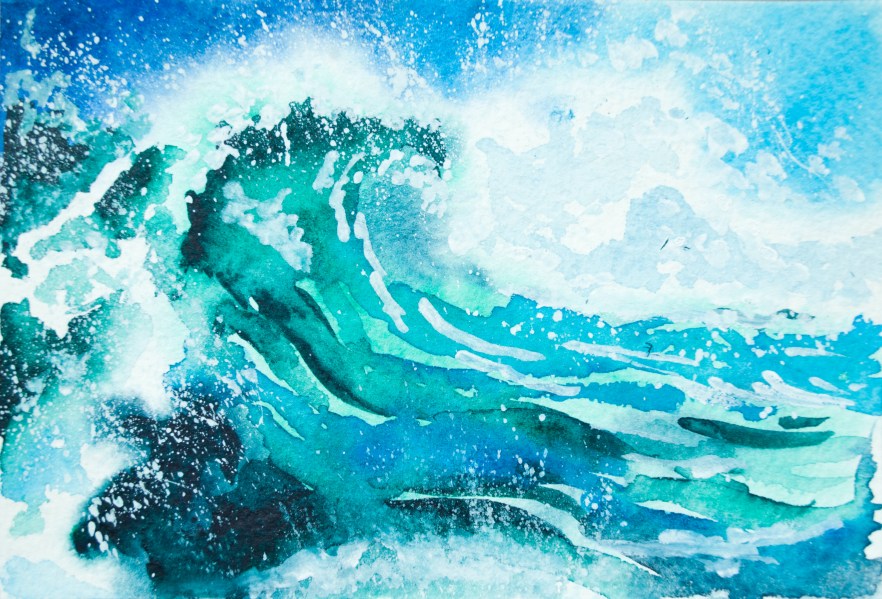
In nature, water is always in motion. Even when it seems to stand still, it is slowly sinking into the earth or evaporating into mist, rotting leaves, or sheltering water creatures we can’t even see.
When the kids ride past the entrance to CVS, I don’t call them back, thinking they’ll realize and turn around. Through the automatic glass door that has just closed behind me, I can see them chatting with Duane, the homeless guy in the parking lot.
Olive oil, milk, eggs, walnuts, granola: the list in my hand says. I don’t even smile at the employees I know as I walk by, figuring they’ll think it’s because of my mask or that everyone is grumpy these days.
Passing through the 50%-off Easter section, I grab a box of egg dye for next year, and glance back, not wanting to admit that I’m hoping that they will come in any minute and call, “Mama?”
I feel like a criminal, my whole torso is now churning. In the magazine section, I don’t find any maze books for Luke and Diana but stop to examine a Penny Press “On the Go” Word Seek.
More furious now with myself than with them, I take 2 of the word search booklets and head to the grocery aisles. An employee with a blue surgical mask sets a box down on the ground and begins unpacking.
I see a flash of the three of them with their bikes at Whole Foods, Diana sobbing and frantic.
“Remember when the waves were really big in Italy?” Diana said recently on an evening walk. “That was so, so, so fun!”
I was afraid of those waves — I’d been clobbered too many times by the sea. But she, who had just turned 5 and couldn’t even swim and only had a floaty that we called her ciambella, felt joy. “It was like you were riding a wave to the sun!”
Don’t struggle when you’re drowning. Don’t try to fight the waves. Don’t swim against the tide, you’ll wear yourself out. Just let go and float.
They only had to cross one intersection with a stoplight — they’ll be fine. I find generic olive oil and get two because the second one is half off. Mark is 12. He can handle this for everyone. Semi-trucks on the avenue rumble like a herd of elephants charging a watering hole. I grab the dried mango slices I know they like, and then head to the self-checkout.
Like a vase full of cracks, I gingerly scan all the items myself, something the kids would have loved to have done — jockeying to push buttons, scan bar codes, and insert the credit card. On the walk home alone, the cold sun feels like an x-ray.
I get to the house, the two heavy plastic bags now cutting into both hands. I don’t see any bikes or coats tossed in front, and I know I’m in trouble.
Sofia is taking a baking sheet out of the oven when I walk in. “What happened?” she says. “You should bring your phone with you when you go out. They’re here but they didn’t know where you went, and I was trying to get a hold of you. I thought you would be worried.”
Living in this world is not so much like walking in air but like swimming in water. The waves I create affect everyone around me, and the waves of others affect me.
Holding back feelings like fear, sadness, and disappointment prevent me from healing. Being happy all the time would be like a wave that never falls.
If you have been offended, forgive the offender. And if you feel oppressed for your own offenses against others, forgive yourself.
Emoto Masaru
“Lunch!” Sofia calls after about an hour, and then gathers her laptop and cord and notebooks and heads down to the basement for a class, leaving me and Mark and Luke and Diana alone with each other and our plates of lentils, kale, homemade hummus, and rings of watermelon radishes.
“Where were you?” says Luke. “We went into CVS but didn’t see you.”
“I was holding a bunch of stuff and I was too angry to go running after you,” I say. So many pent up emotions inside me. Enough to power Las Vegas.
What would it be like if, instead of starting my day with, “This is not working,” I started it with, “You’re beautiful”?
Diana looks into my eyes, her eyes wet with empathy, comes over to me and kisses my face.
I begin to open a spillway. Let the lights go dim in Vegas. There’s probably no one there anyway.
Balloons

The mayor announced Friday
schools will not reopen this year
and distance learning will end
three weeks early
I feel like a balloon in a bunch
when the man loosens his grip
and one by one
we just fly away
Bless You
We have to wear masks now to go to stores.
My mom sent us 7 in different sizes
out of fabric I recognize from her curtains and dresses.
We wear them to the Bullfrog Bagel truck
in the bike shop parking lot.
The bagels are so creamy and chewy,
“hand-rolled and boiled the old-fashioned way.”
Luke sneezes just as we get to the window,
his mask lowered to his chin.
The guy in the truck looks stricken.
People used to think
sneezing was like expelling your soul.
Hanging in the air,
a “bless you” was needed
to save the devil from snatching it.
Now sneezing is like expelling the devil.
And it’s the not the sneezer who needs the blessing,
but the witness
to save him from the devil hanging in the air.
A 1st Grader’s Journal
In the spring I like to…
do a easter egg hunt,
die eggs,
make a easter egg drawing,
plant seeds,
ride my bike on a walk on the streets,
have popsicles outside if it is sunny and warm,
eating lamb on easter,
reading,
writing cards to people in my family,
watching my toolips open,
encourage my baby boxwoods.
The Horror and the Beauty

Easter came too early this year. With a plague terrorizing the planet and most of the world in lockdown, the traditional day of celebrating new life felt more like a funeral.
We still went ahead with hiding candy for the kids under daffodil tufts, dipping hard-boiled eggs into dye baths of pink and purple, and dressing up in button-downs and yellow sweaters. We roasted a leg of lamb and even attempted via WhatsApp group calling to sit down with Enrico’s father and brother, quarantined in Milan for 35 days now, but the timing didn’t work out and we just ate alone.
A new ceremony was added this year. After the kids ate the ears off their chocolate bunnies, we set the laptop at the end of the table and turned on YouTube to see Italian opera singer Andrea Bocelli singing live from the empty Duomo of Milan.
The broadcast begins with the camera panning over scenes of barren Milan, Paris, New York, and Bocelli’s voice speaks of hope as it if were something almost impossible to muster. In these once-vibrant cities, the only signs of life are a single car at a stop light or an only man riding a bike, and when I see a flock of birds flying off a roof in empty London, I want to cry.
The silent eye of the camera even hovers over Porta Ticinese in Milan, one of the city’s original gates which was a traffic nightmare, dangerous to walk through, always jammed with honking cars, screeching trams, and trucks spewing exhaust fumes. Now the only thing moving is a single tram inching through the silence, and my heart breaks for everything we have lost, even the things I didn’t want before.
We sit around the table watching scenes of Bocelli singing “Domine Deus” braided with images inside the majestic Duomo, so empty you can take in its gorgeous marble patterned floors, ornate crucifixes, and silver effigies of cardinals. The kids are goofing off, some of us are lulled into a trance, then — for a few seconds — the camera visits a statue of a skeletal man, every string of muscle in his arms popping out, every tendon, vein, and bone in his hands exposed. A figure from a horror movie, and I call out, “What was that?”
“What’s wrong with him?” Virginia says.
“What, who?” the kids ask.
St. Bartholomew the Flayed, one of the twelve apostles, was skinned alive. He is usually shown by medieval and Renaissance artists, including Michelangelo in the Sistine Chapel, holding his limp skin including the face and hair, drooping and sad.
We are not used to this type of art in America. Art here seems to be about beauty, transcendence, serenity. Churches in Italy show paintings and mosaics and stained glass windows of saints being tortured, beheaded, and stabbed, or masses of believers being slaughtered and dumped in ditches, their skulls displayed in glass cases. When I see these gory images I am at once fascinated, ashamed to be fascinated, and shaken, returning to the images in dreams and day thoughts, trying to untangle what humans have done to each other, what horrors I have been spared.
A few summers ago we were touring a church in Puglia, when Luke who was 7 years old, dragged me over to an enormous painting of a woman with a bloody spot where a breast should have been, and a group of people about to cut off her other one.
“What’s happening?” he asked. I summoned Enrico for help, who knew right away, and with a matter-of-factness I couldn’t have called up, said in Italian, “That’s St. Agatha.” Agatha was a girl who vowed to stay a virgin and was punished by a Roman prefect when she refused to marry him.
I grew up in a culture where death is kept at a safe distance — something abstract that happens to plants or in nursing homes. We glorify youth and avoid aging. Ever striving to grow, renew, uplift.
My life in a way is a story of turning the other way — chasing parties, glitter, and beautiful distractions, or as I matured, seeking wholesomeness and light, productivity and feel-good philosophies.
But decay, dissolution, and death is an essential part of this universe, of being here. Denying this reality is like walking through life as a petulant toddler — grabbing this, rejecting that, throwing tantrums when we don’t get what we want.
The newspaper that thumps against our stoop every morning — one of the few things that enters from the outside world — functions like the art of old Europe. Pictures and stories show me miles of cars waiting for food bank hand-outs in San Antonio, dead bodies left in the street in overwhelmed Ecuador, thousands of gallons of milk once destined for schools being dumped into lagoons, millions of people laid off or not needed anymore as entire industries vanish, stampedes of thousands of Kenyans trampling each other for rations, convoys of Italian military trucks called to carry coffins away from overcome morgues.
And I am forced to sit in the pews, and watch. The lockdown keeps me from looking away and rushing off with all of my busyness. I must sit in this pool of sorrow.
But it’s OK. I am not ready for hope. I have protected myself for too long from suffering, of myself and others.
The pandemic has given me the gift of truth. We are all vulnerable and powerless over the things we try to run from — pain, sickness, disintegration. Accepting this truth and mourning the world’s losses is how I will find my way out into the light, like Bocelli who at the end of his lamentations walks down the aisle of the Duomo out onto the steps outside, and sings “Amazing Grace” to an empty square: “I was blind, but now I see.”
The Christian story of Easter is about death as much as it is about birth. Hope doesn’t have to be a happy band-aid — it can be the sun behind the clouds, the answers in the shadows, the tears that flow both for what is lost and what is found.
Italian churches are able to express all of this — the beauty and the horror, the sadness and the joy, the descent into purgatory and the re-emerging into the light of grace.
We will emerge from this tragedy one day. We will be able to leave our houses and meet again. We will laugh, hug, look into each other’s eyes from less than 6 feet away.
We will emerge, I imagine, emaciated and shaken, like Bartholomew the Flayed. Stripped of our outer layer, we will be tender. Hungry to be grateful. To love the rain that collects in puddles, the brown sparrows that peck at the dirt, the tiny flowers we once dismissed as weeds.
Quarantine Blessing
Today was the first time in years my husband was home for a weeknight dinner. His evening appointments have slowed. He was worried, but a break from his schedule feels like a gift we are going to hold gently.
He sat across from me and between Diana and Luke, and when Sofia set down in front of him a bowl of her red lentil and farro salad with roasted carrots and arugula, he said in his deep voice, “This is beautiful.” I know he meant it, even though he loves meat.
 Painting with Words